Recently, the 2026 Radiosurgery Society (RSS) Scientific Meeting, a major international event in the field of radiosurgery, successfully concluded in Orlando, Florida, USA. The meeting brought together leading experts, researchers, and industry professionals from around the world to explore the latest advances in radiosurgery and precision radiation therapy.
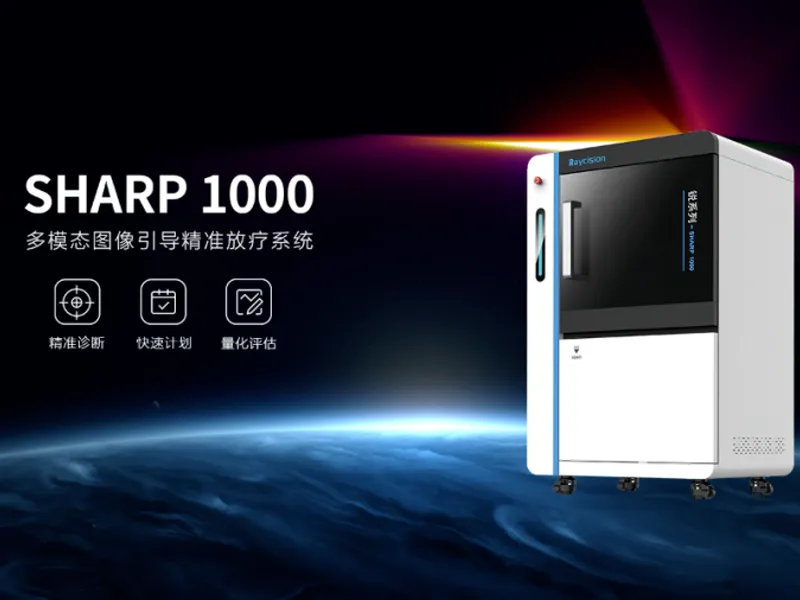
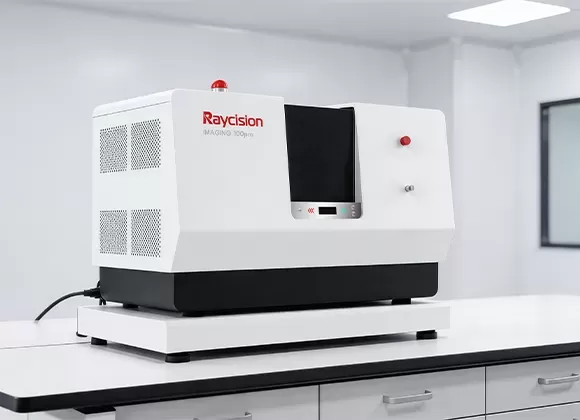
A research project supported by Raycision’s independently developed SHARP 1000 Multimodality Image Guided Precision Radiation System was selected for an oral presentation at the meeting. The study focused on spatially fractionated radiotherapy (SFRT) and demonstrated the capabilities of the SHARP 1000 in supporting advanced preclinical radiation research, bringing Chinese-developed precision radiation technology to an international academic platform.
The RSS Scientific Meeting is one of the leading international forums dedicated to radiosurgery and advanced radiation therapy, with a strong focus on areas such as stereotactic radiosurgery (SRS), stereotactic body radiotherapy (SBRT), and emerging radiation technologies. It provides an important platform for researchers and clinicians worldwide to share new findings and discuss future directions in radiation oncology.
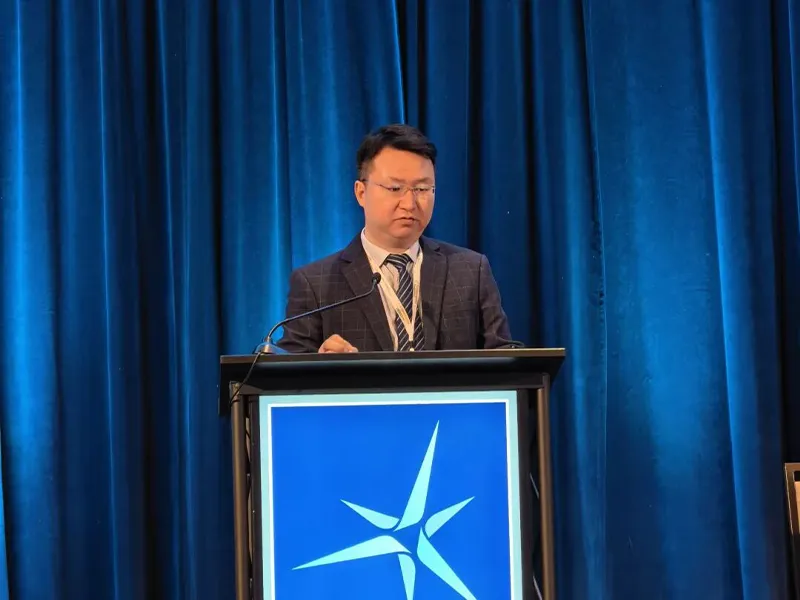
The oral presentation was entitled “SCART Modulates the Immune Microenvironment and Enhances Ablative Effects in Murine Hepatocellular Carcinoma Models: Insights from Histopathology and Spatial Transcriptomics.”
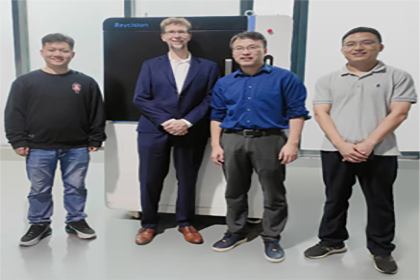
Led by the research team of Jun Yang and Jie Yuan from Foshan Fosun Chancheng Hospital, the study relied on the SHARP 1000 throughout the experimental process to perform spatially fractionated irradiation and treatment response evaluation in murine hepatocellular carcinoma models. The study’s innovative findings and technical approach attracted considerable attention from international researchers.
Independently developed by Raycision, the SHARP 1000 is an advanced multimodality image-guided precision radiation system integrating micro-CT and optical molecular imaging. Designed for preclinical oncology and radiation biology research, the system combines multimodality imaging, treatment planning, precision irradiation, and treatment response evaluation within an integrated workflow.
Its capabilities are built around three key advantages.
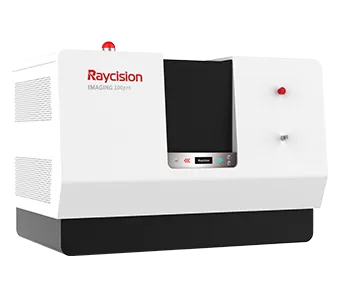
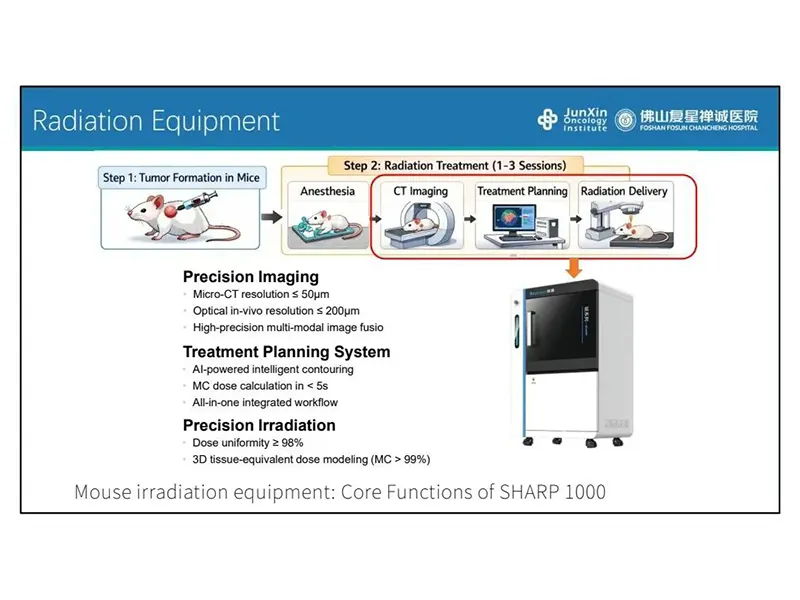
The SHARP 1000 incorporates an ultra-high-resolution micro-CT imaging module with a resolution of up to 50 μm, together with 3D optical molecular imaging with a resolution of up to 200 μm.
This combination enables researchers to accurately localize tumors in small animals and perform three-dimensional reconstruction.
Through multimodality image fusion, the system integrates the anatomical information provided by micro-CT with functional and molecular signals obtained through optical molecular imaging. This allows researchers to visualize both tumor structure and biological activity, helping overcome the limitations of conventional single-modality image guidance in target identification and localization.
The resulting multimodality information provides a robust imaging foundation for precision preclinical radiation therapy.
To address time-consuming target delineation and inefficient workflows commonly encountered in preclinical radiation research, the SHARP 1000 incorporates an AI-powered automatic contouring algorithm.
The system can automatically contour mouse organs and target structures within approximately 5 seconds, significantly reducing the amount of manual work required during treatment planning.
It also incorporates a GPU-accelerated Monte Carlo dose calculation algorithm, enabling fast and highly accurate radiation dose calculation.
With its integrated workflow, the SHARP 1000 supports advanced radiation techniques comparable to those used in clinical practice, including IMRT (Intensity-Modulated Radiation Therapy) and VMAT (Volumetric Modulated Arc Therapy).
By bringing clinically relevant radiation techniques into preclinical studies, the platform helps researchers develop experimental protocols that more closely reflect clinical treatment scenarios while significantly improving research efficiency.
Precision radiation delivery is another core capability of the SHARP 1000.
The system achieves dose uniformity of ≥98% and supports 3D tissue-equivalent dose modeling with an accuracy of >99%.
Such precise dose control enables researchers to deliver highly controlled radiation to tumor targets while minimizing unnecessary exposure to surrounding healthy tissues.
This level of accuracy is particularly valuable for studies investigating radiation therapy in combination with immunotherapy, providing researchers with consistent and reliable experimental data for evaluating therapeutic effects and exploring underlying biological mechanisms.
As a Chinese company specializing in advanced biomedical imaging and precision radiation technologies, Raycision remains committed to independent research and technological innovation.
The successful application of the SHARP 1000 in research presented at the 2026 RSS Scientific Meeting demonstrates the system’s ability to support sophisticated preclinical studies in areas such as oncology, radiation biology, and tumor immunology.
It also reflects the increasing capabilities of independently developed small-animal precision radiation platforms in meeting the requirements of internationally advanced biomedical research.
Looking ahead, Raycision will continue to advance its technologies and develop more comprehensive biomedical imaging and precision radiation solutions. By providing researchers worldwide with more precise, efficient, and integrated research tools, Raycision aims to support scientific discovery, accelerate translational research, and contribute to continued progress in precision medicine.
Experimental Equipment